Director / Writer / Producer · She / They
About.
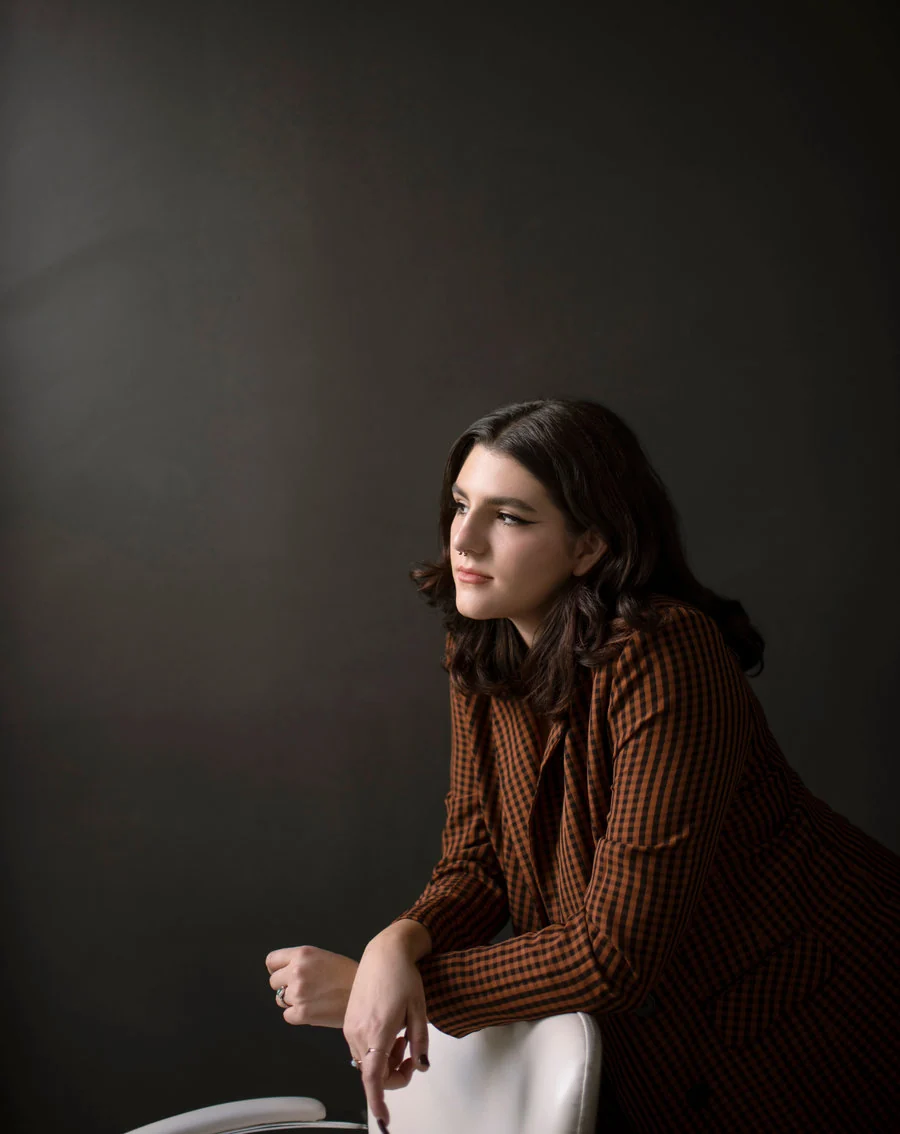
Lucy Murphy
Lucy Murphy (she/they) is a New York–based theatre and film director, writer, and producer. As a queer, disabled artist, she is committed to creating work that challenges conventional narratives and highlights the structures of power that shape our world. Her work centers on science fiction, alternative theatrical forms, and the collective act of imagination between performers and audiences.
Her directing work includes RAGE (Tara Skye Productions / Dead Horse Productions), That Joint on Highway 2 (Daisy Theatricals), Say “NO” to One Paseo (Euphoria Theatre Company / Rogue Theater Festival), Vernissage (The Tank, PrideFest), and BABEL (Carnegie Mellon University).
She has assistant directed Walden at TheaterWorks Hartford and Anxiety is the Dizziness of Freedom at NYU Tisch Stages, both directed by Mei Ann Teo. Her experience also includes a directing and marketing internship with the York Theatre Company and acting instruction for Diamond Head Theatre.
Lucy holds a BFA from Carnegie Mellon University’s John Wells Undergraduate Directing Program, Class of 2023, where she also served as producer of the School of Drama’s Playground Festival XX.
Lucy Murphy (she/they) is a New York–based theatre and film director, writer, and producer. Her work centers on science fiction, alternative theatrical forms, and the collective act of imagination between performers and audiences. Directing credits include RAGE (Tara Skye Productions / Dead Horse Productions), That Joint on Highway 2 (Daisy Theatricals), and Say “NO” to One Paseo (Euphoria Theatre Company). She has assistant directed for Mei Ann Teo at TheaterWorks Hartford and NYU Tisch Stages. BFA, Carnegie Mellon University’s John Wells Undergraduate Directing Program.
Artistic Statement
Growing up pursuing a life in theatre, first as a performer, then as a director, I was always reminded of the futility of my goals. At every turn, I’d hear, “You know, you gotta be really lucky!”, and “Don’t get into it for the money!” The truth is, those concerns were valid. Sometimes, being an emerging artist trying to balance unpaid gigs, multiple survival jobs, networking, and rest feels like trying to win a jackpot at a slot machine while it’s attached to a giant boulder you have to push up a hill. However, there was one remark I have never once been worried about: that a life in theatre is futile because theatre is a “dying art form”.
There are a lot of things I have left to learn about theatre and its community, but I do know this: theatre is not dying; the world is starving for it. We have not used the powers that theatre offers us to their full extent, for fear of losing mass appeal, depriving wealthy donors and patrons of their personal theatrical tastes, or even of being “cringeworthy” in any way. One realization changed my whole perspective on this: the people crave LARPing. LARPing (live-action role play) is the ultimate theatrical experience, and seeing how people long for experiences involving what I like to call “covert LARPing” (when they don’t outright call it that) has fortified my belief in the magic and usefulness of theatre.
Distilling theatre down to its basics, it becomes clear that it is unique in one specific way: interaction with an audience. In any theatrical performance, from the most experimental immersive piece to a proscenium-staged straight play, the performers breathe out the story, and the audience breathes it in. The intricacies of a performance influence the intricate web of reactions from an audience, and each group influences the others for the duration of time that they’ve agreed to suspend their disbelief and imagine together. That collective act of imagination is one of theatre’s most powerful artistic and social tools.
In a world where more and more feels unreal, and as generative AI slowly creeps into creative roles, the stories we experience through TV, social media, and even film are becoming flatter and more distant. People increasingly prioritize experiences over entertainment. They don’t want an AI video of Phantom of the Opera, they want the real thing, and they want to be part of it.
I would like to reframe what a night out at the theatre can be. Right now, it is often framed like a nice dinner: an excuse to dress up, hopefully laugh, etc. In my dream future artistic landscape, theatre is an experience, closer to LARPing than sitting down for a fancy dinner. Instead of a brand-new hydraulic set for a Broadway revival no one asked for, let’s use that level of detail and design power to create a world. Let’s immerse an audience in it with actors, and use that opportunity to make people think, educate, and build avenues for communication and healing.